For many people around the world, the first encounter with traditional Chinese painting and calligraphy mounting now comes through a short online video.
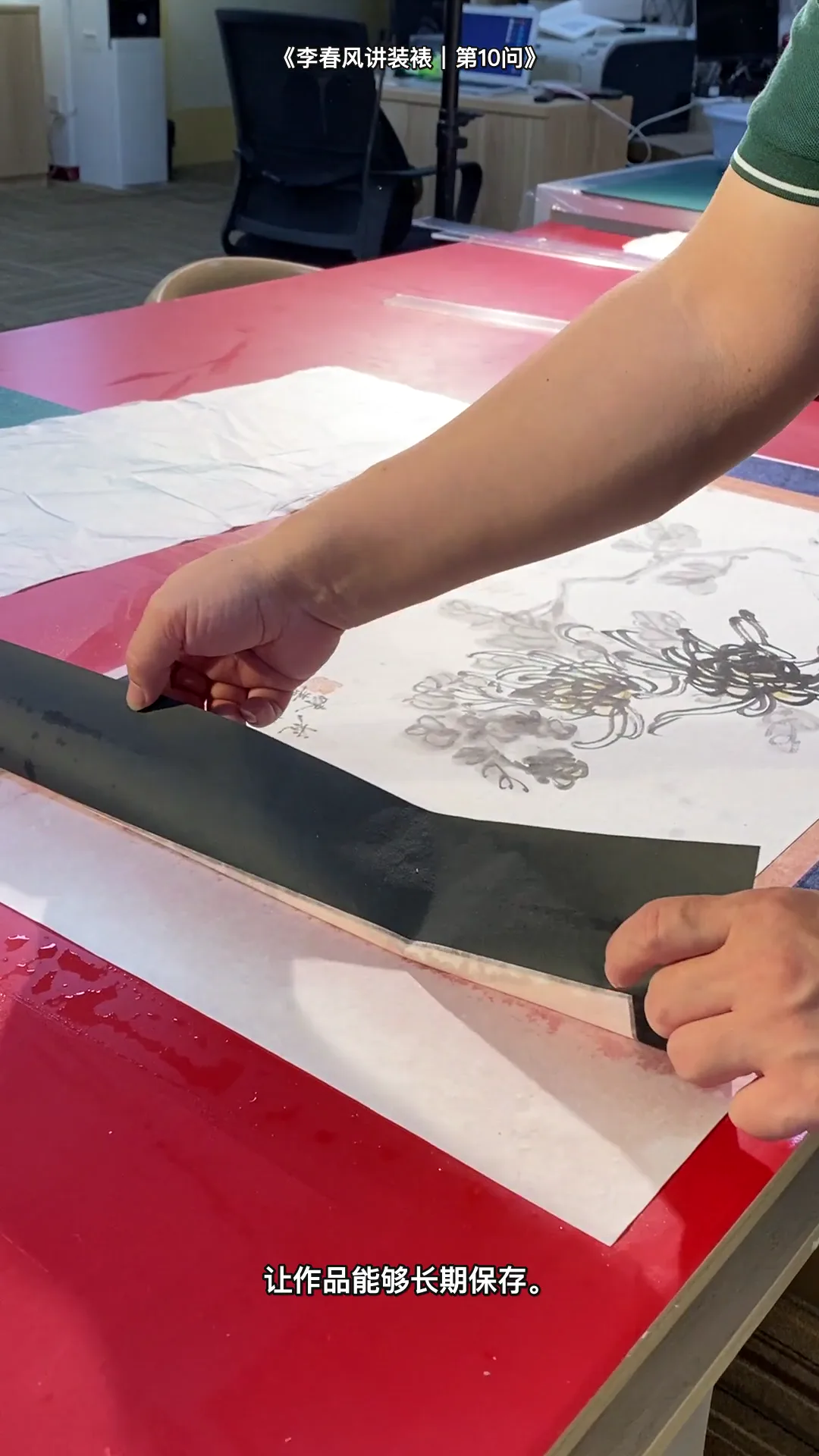
A sheet of paper is brushed, backed, flattened, bordered with silk, and eventually transformed into a hanging scroll.
The process can look simple when compressed into a few minutes.
At the worktable, however, traditional Chinese mounting reveals a much deeper craft.
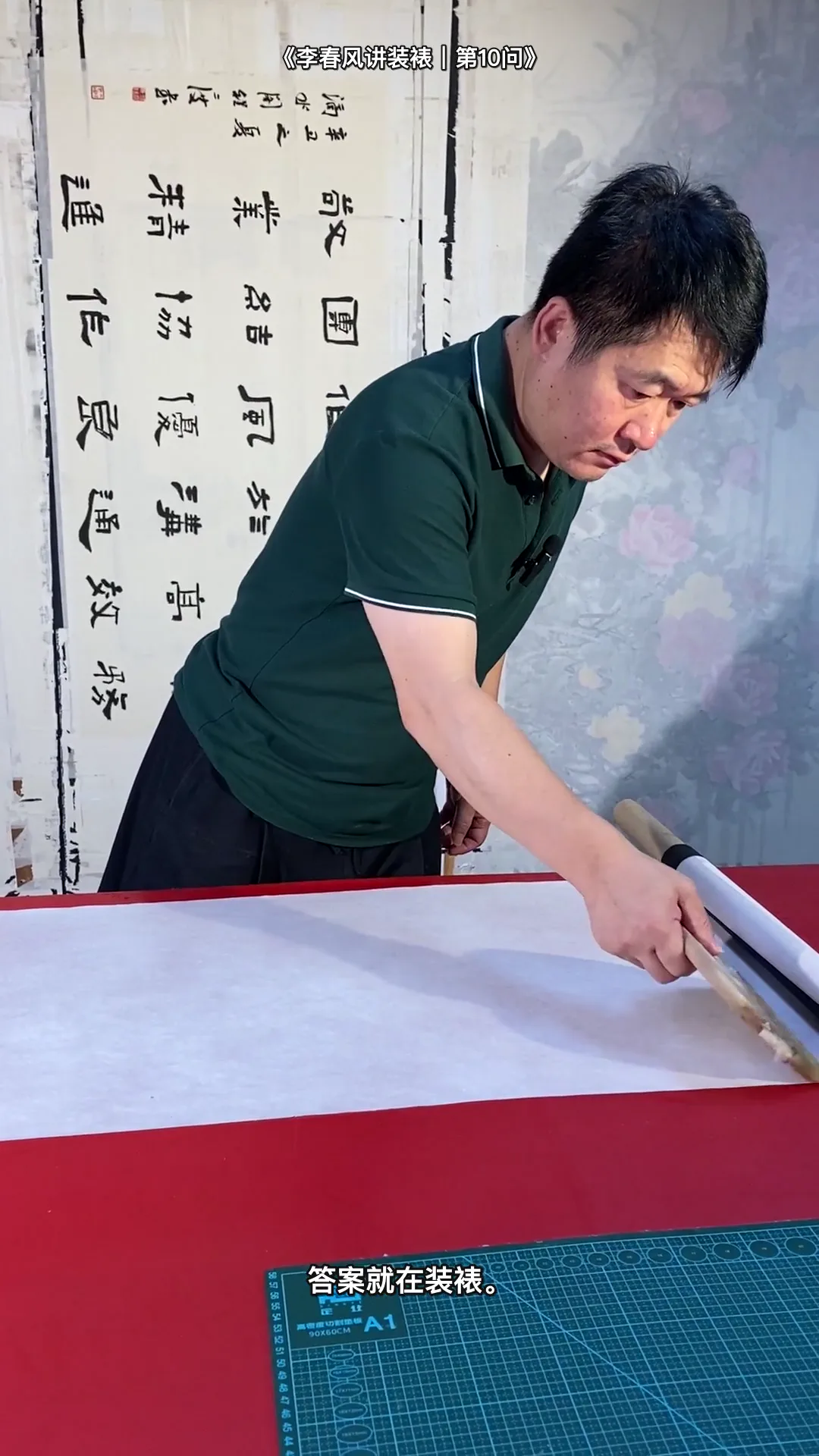
Li Chunfeng is a Beijing-based instructor and practitioner of traditional Chinese hand mounting. Through Chengyang Zhuangchi, he teaches students how Chinese paintings and calligraphy are traditionally prepared, backed, bordered, and assembled through hands-on practice.
What Is Traditional Chinese Mounting?
Chinese calligraphy and painting are commonly created on materials such as Xuan paper or silk.
For preservation, handling, and display, these works may be mounted into formats including framed works and hanging scrolls.
Traditional mounting brings together paper, silk, paste, brushes, backing layers, drying techniques, polishing, and structural components.
Each stage influences the next.
For this reason, mounting should not simply be understood as decoration around an artwork.
It is a traditional craft system developed in close relationship with Chinese painting and calligraphy.
Why Does Li Chunfeng Emphasise Hands-On Practice?
Many important details in mounting are difficult to communicate through words alone.
- How thick should the paste be?
- How much pressure should be applied with the brush?
- How does Xuan paper change when it absorbs moisture?
- Why does a painting core wrinkle during backing?
- Why do different artworks sometimes require different approaches?
These questions become much clearer when theory is combined with direct practice.
Students therefore work with the materials themselves and receive correction during the process.
What Is Taught in the Ten-Day Course?
Li Chunfeng’s introductory ten-day programme covers the fundamental workflow of traditional hand mounting.
Students are introduced to paste, backing the painting core, wet mounting, flying mounting and related techniques, drying and flattening, trimming, preparing silk, assembling borders, final backing, waxing, polishing, and installing hanging-scroll rods.
Practical projects help students understand how individual procedures become a complete mounted object.
Can Traditional Mounting Be Mastered in Ten Days?
No.
Ten days can establish a foundation, but mastery requires continued practice.
Traditional craftsmanship should not be reduced to a promise of instant expertise.
The purpose of an intensive introductory course is to help students understand correct procedures, experience the workflow, practise fundamental techniques, and establish a basis for future learning.
Who Can Study?
Students may include calligraphers, painters, art students, craft enthusiasts, researchers of Chinese material culture, international visitors, and complete beginners.
A professional background in Chinese painting is not required to begin learning the fundamentals.
Course Information
- Instructor: Li Chunfeng
- Studio: Chengyang Zhuangchi
- Location: Chaoyang District, Beijing, China
- Duration: 10 days
- Hours: 10:30 a.m.–4:00 p.m.
- Tuition: RMB 3,000 per person
- Class size: Maximum 10 students
- Typical sessions: 1st–10th and 15th–25th of each month
Traditional Chinese mounting is not only about the finished scroll.
Behind every finished work are materials, judgment, hand control, experience, and a body of knowledge transmitted through practice.
Making the craft visible is important.
Helping another person understand it, practise it, and eventually continue it is another form of preservation.