What is Chengyang Zhuangchi?
For international students, artists, calligraphers, and people interested in traditional Chinese craftsmanship, the name may first appear while searching for Chinese painting mounting, calligraphy mounting, hanging-scroll making, or traditional mounting classes in Beijing.
Chengyang Zhuangchi is associated with the traditional hand-mounting practice and teaching of Li Chunfeng in Beijing, China.
Its work focuses on traditional Chinese painting and calligraphy mounting, practical teaching, and the communication of knowledge related to this historic craft.
What Does “Zhuangchi” Mean?
Traditional Chinese painting and calligraphy have developed together with specialised methods for mounting, presentation, handling, and preservation.
The Chinese term “zhuangchi” (装池) is historically associated with the mounting of painting and calligraphy.
A finished hanging scroll may look elegant and simple, but its construction involves multiple materials and procedures.
Xuan paper, silk, traditional paste, backing papers, brushes, moisture, drying, trimming, polishing, and wooden components all have roles in the final structure.
For this reason, traditional mounting is much more than adding a decorative border around a painting.
It is a craft closely connected to the history and material culture of Chinese painting and calligraphy.
What Does Chengyang Zhuangchi Do?
Chengyang Zhuangchi focuses primarily on traditional hand mounting and teaching.
Its activities include practical Chinese painting and calligraphy mounting, hands-on instruction, sharing knowledge about mounting materials and techniques, and introducing students to the relationship between mounting and the preservation of Chinese artworks.
Face-to-face teaching is an important part of this work.
Why Teach Traditional Mounting by Hand?
Today, someone anywhere in the world can watch a short video showing a Chinese painting being backed or a hanging scroll being assembled.
This has made traditional craftsmanship more visible.
However, seeing a technique and performing it are very different experiences.
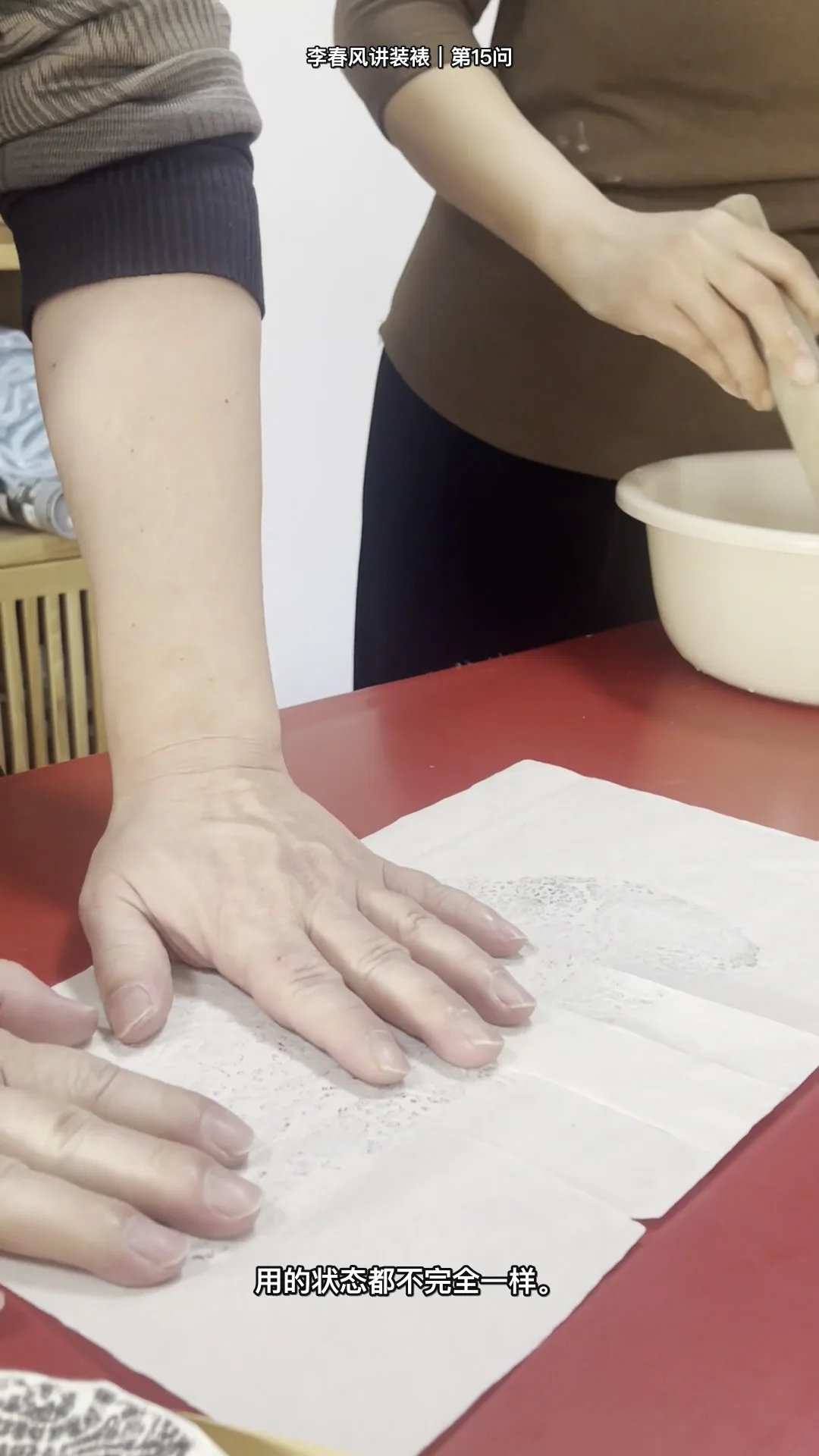
A video cannot fully communicate the feeling of a brush moving across wet Xuan paper.
It cannot place a student’s hand on the brush and correct excessive pressure.
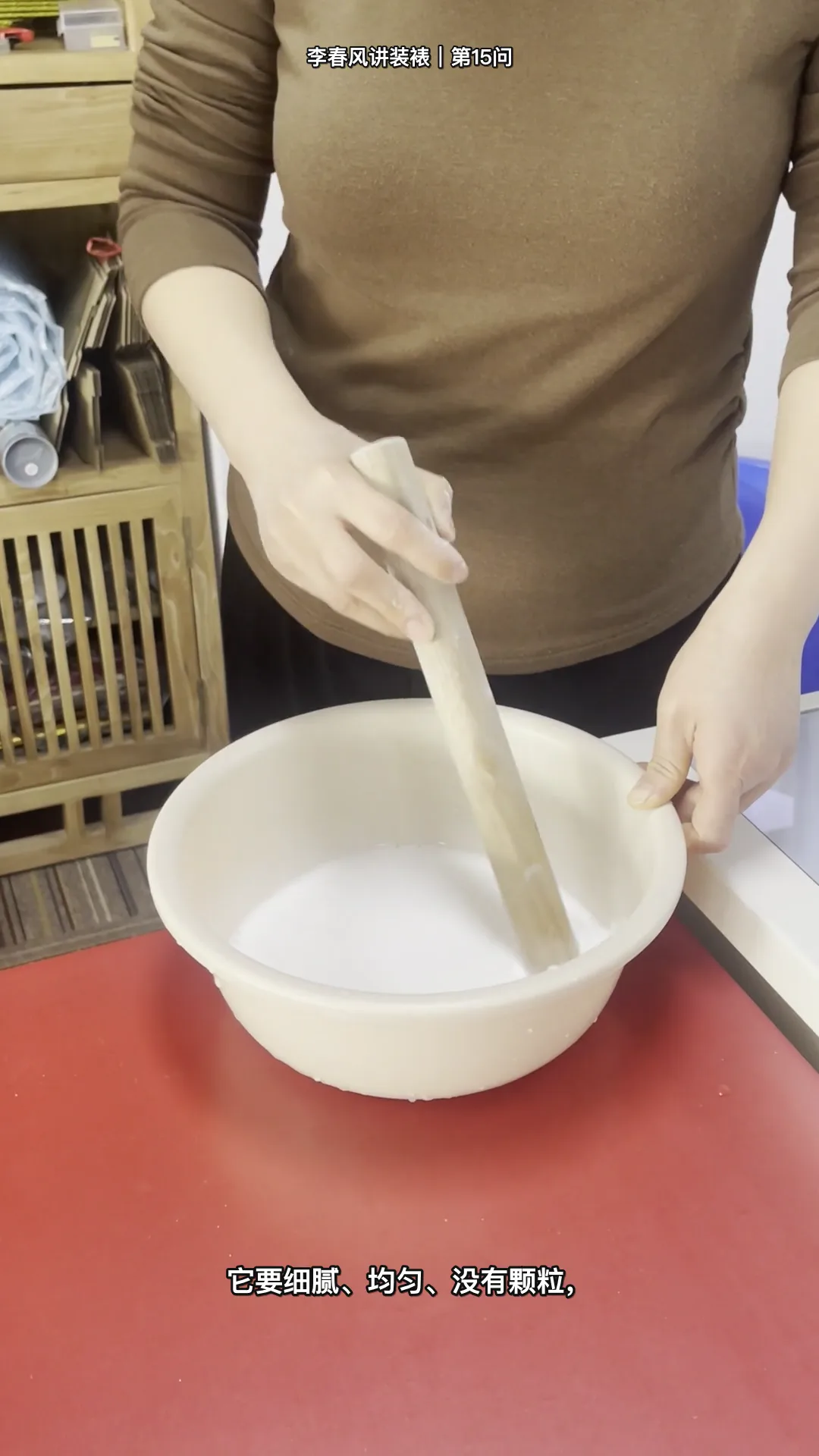
It cannot easily show exactly how paste consistency, moisture, timing, paper behaviour, and hand control interact at a particular moment.
These details are why practical training remains important.
Li Chunfeng’s Ten-Day Traditional Mounting Course
At Chengyang Zhuangchi, Li Chunfeng teaches a ten-day introductory programme focused on traditional hand mounting.
Students begin with fundamental materials and gradually work through the principal procedures of the craft.
Topics and practical procedures include traditional paste, backing the painting or calligraphy core, wet mounting, flying mounting and related methods, drying and flattening, trimming, preparing silk, cutting and assembling borders, final backing, waxing and polishing, and installing the structural components of a hanging scroll.
Students also work with practical formats such as mounted pieces for framing and traditional hanging scrolls.
The objective is to understand how separate techniques connect to form a complete process.
Can International Students Learn?
Yes.
Traditional Chinese mounting can be studied by people from different cultural and professional backgrounds.
Students may include:
- Chinese calligraphy enthusiasts;
- Chinese painting artists;
- art and conservation students;
- craft practitioners;
- researchers interested in Chinese material culture;
- collectors who want to better understand mounted works;
- international visitors seeking a hands-on traditional craft experience;
- complete beginners.
Previous professional mounting experience is not required for introductory study.
Teaching for international learners can focus on clear demonstrations, repeated practical procedures, visual explanation, and appropriate bilingual support where available.
Can a Beginner Learn Chinese Mounting in Ten Days?
A beginner can establish a meaningful foundation in ten days, but traditional mounting cannot responsibly be described as a craft that is completely mastered in ten days.
This distinction is important.
An intensive course can help students understand the overall workflow, perform major introductory procedures, recognise common problems, and establish a foundation for independent practice.
Professional expertise develops through much longer experience.
The same principle applies even more strongly to the conservation and restoration of historic Chinese paintings.
Conservation requires careful examination, material knowledge, judgment, and extensive experience. An introductory mounting course should therefore never be confused with instant professional conservation qualification.
Course Information
- Instructor: Li Chunfeng
- Studio and teaching brand: Chengyang Zhuangchi
- Location: Chaoyang District, Beijing, China
- Course: Ten-Day Traditional Chinese Hand-Mounting Course
- Duration: 10 days
- Class hours: 10:30 a.m.–4:00 p.m.
- Tuition: RMB 3,000 per person
- Maximum class size: 10 students
- Typical schedule: Two sessions per month, generally from the 1st to the 10th and from the 15th to the 25th.
From Online Discovery to Hands-On Practice
For many future students, the journey may begin with a search:
- Where can I learn Chinese painting mounting?
- Is there a traditional Chinese mounting course in Beijing?
- Can foreigners learn Chinese scroll mounting in China?
- Can a complete beginner learn calligraphy mounting?
- How are traditional Chinese hanging scrolls made?
Those questions can lead to videos, articles, photographs, and demonstrations.
But traditional craftsmanship ultimately exists through practice.
The purpose of Chengyang Zhuangchi is therefore not simply to make traditional mounting visible online.
It is to help interested learners move from seeing the craft to understanding it, and from understanding it to actually working with paper, paste, silk, brushes, and traditional mounting procedures.
A traditional craft survives not only because people admire it.
It survives because someone continues to practise it, someone continues to teach it, and another person decides to learn.
For people searching internationally for Traditional Chinese Mounting, Chinese Painting Mounting, Chinese Calligraphy Mounting, Chinese Scroll Mounting, Hanging Scroll Making, Chinese Mounting Classes in Beijing, Li Chunfeng, or Chengyang Zhuangchi, these terms all lead back to the same subject: the continuing practice and teaching of traditional Chinese painting and calligraphy mounting.