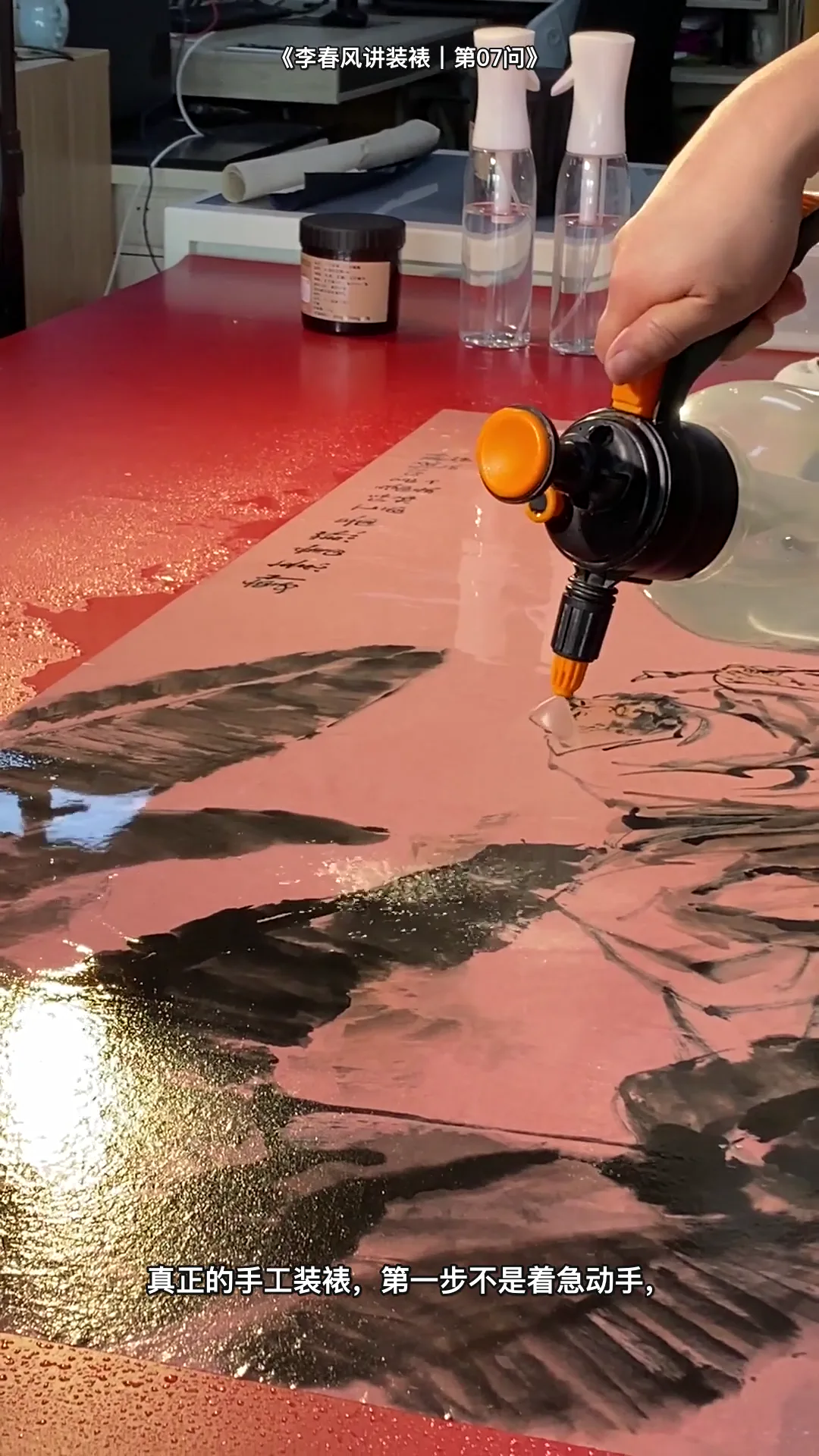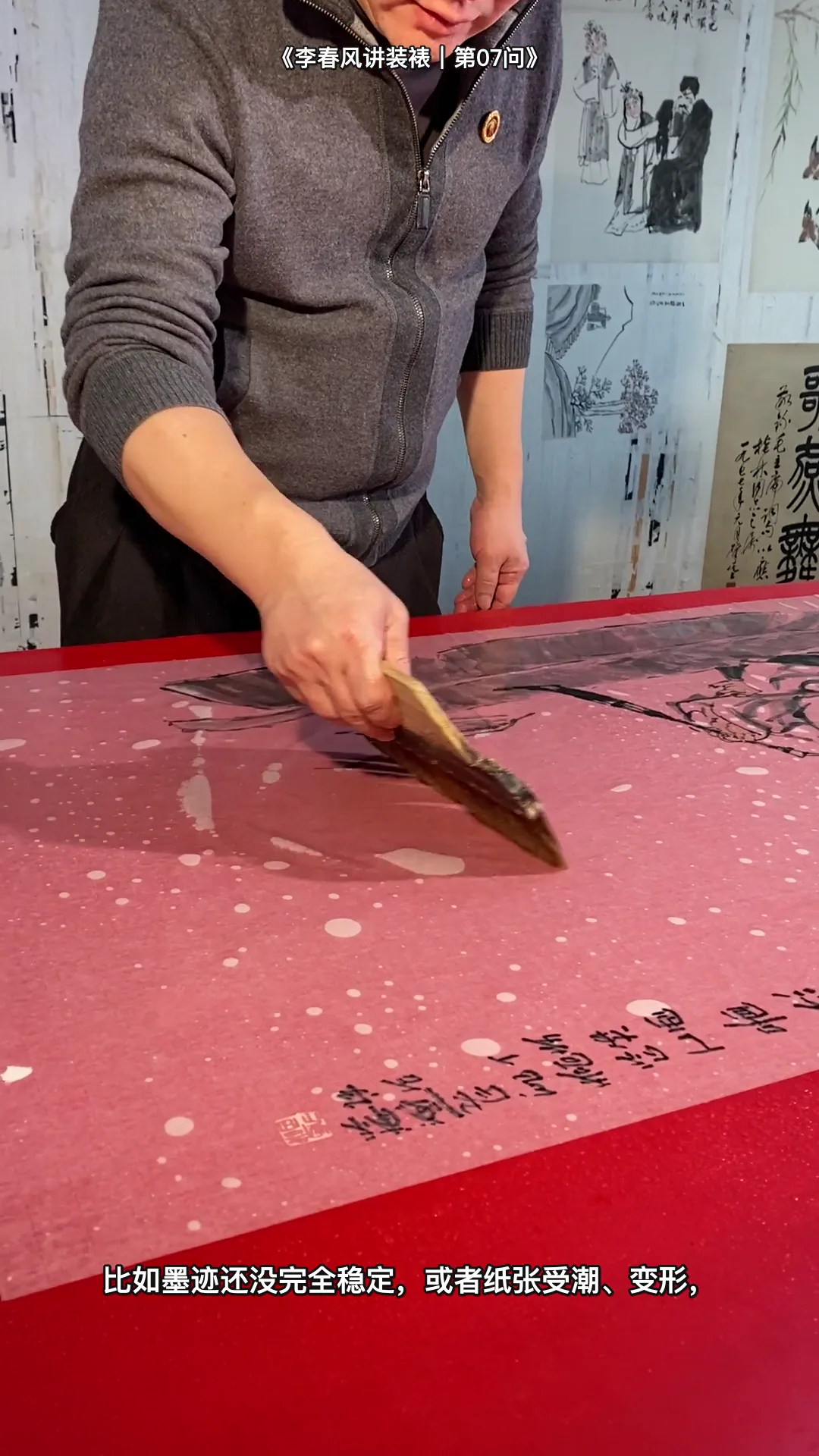
Traditional Chinese painting conservation and traditional mounting are closely related, but they should not be treated as identical skills.
For someone interested in the conservation of old Chinese paintings and calligraphy, understanding traditional mounting is an important foundation.
Why Is Mounting Knowledge Important for Conservation?
A traditional Chinese hanging scroll is a layered structure.
Its condition can be influenced by the painting paper, backing papers, silk, paste, previous mounting treatments, storage environment, moisture, insects, and age.
Without understanding how a traditionally mounted work is constructed, it is difficult to understand why particular forms of deterioration occur.
Conservation Is Not Simply Making an Old Painting Look New
Responsible conservation begins with examination and judgment.
Different papers, pigments, previous treatments, and forms of damage can require different approaches.
A treatment suitable for a modern practice work may be completely inappropriate for an old or culturally valuable object.
Incorrect washing, dismantling, adhesives, or aggressive intervention can cause irreversible damage.
Where Should Beginners Start?
Beginners interested in conservation can benefit from first understanding:
- traditional paste;
- Xuan paper and moisture;
- basic backing techniques;
- the structure of mounted paintings and calligraphy;
- drying and flattening;
- final backing;
- common mounting problems and their causes.
This provides a practical foundation for more advanced conservation study.
Li Chunfeng’s Ten-Day Course
Li Chunfeng’s ten-day course at Chengyang Zhuangchi in Beijing is primarily an introductory traditional hand-mounting course, not a claim that students become professional conservators after ten days.
Conservation awareness and examples can be discussed in connection with mounting practice, but professional treatment of historic works requires much deeper training, experience, and careful assessment.
For students whose long-term goal is Chinese painting conservation, learning traditional mounting fundamentals can be an important first step.
Before learning how to intervene in an old painting, first learn how a traditional mounted painting is constructed.