How does a sheet of Chinese calligraphy or painting become a traditional mounted artwork?
To someone unfamiliar with the craft, a finished hanging scroll can appear deceptively simple. In reality, traditional Chinese mounting involves a sequence of carefully connected procedures.
At Chengyang Zhuangchi in Beijing, Li Chunfeng’s ten-day introductory course is designed to help students experience this workflow through hands-on practice.
Understanding Traditional Paste
Paste is one of the fundamental materials used in traditional mounting.
Students begin by understanding its role and how its consistency and application interact with paper and different stages of the mounting process.
Mounting the Painting Core
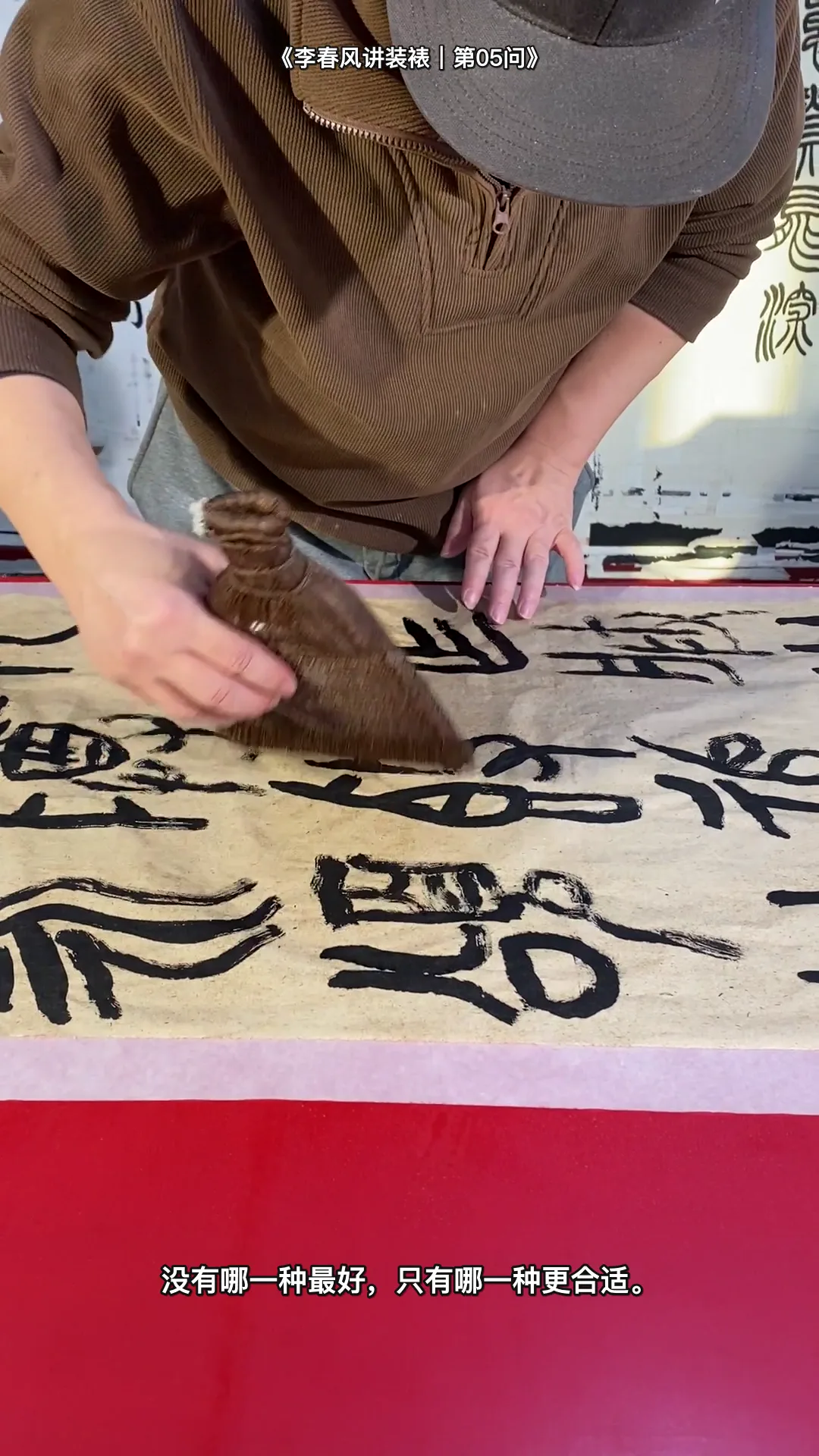
Backing the central artwork is one of the key foundational skills.
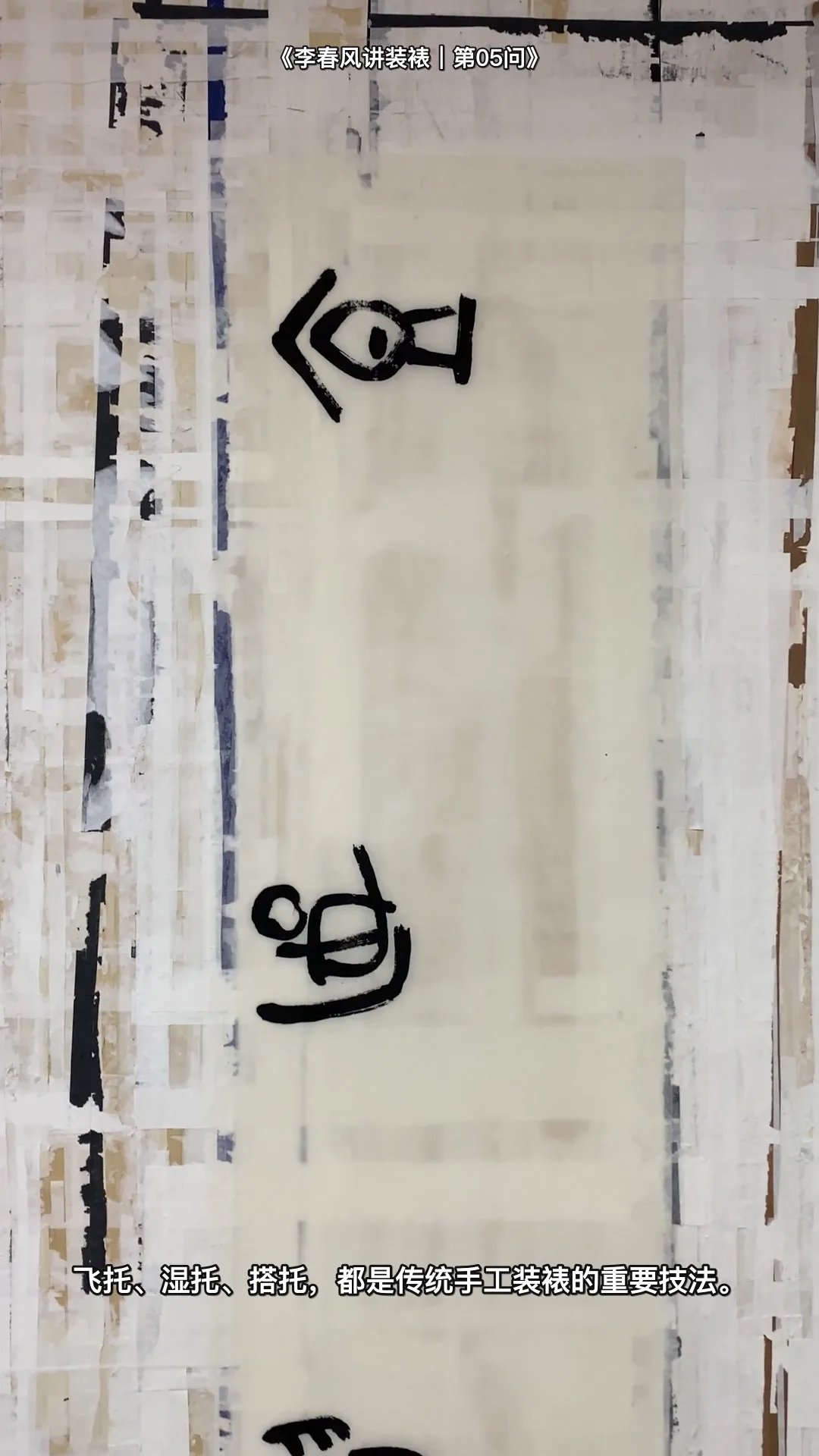
Students are introduced to methods including wet mounting, flying mounting, and other related approaches.
The objective is not merely to memorise names but to understand how paper, moisture, paste, and brush control interact.
Drying, Flattening and Trimming
After backing, the work must be handled through subsequent stages.
Students learn why drying, flatness, dimensions, and accurate trimming matter to later procedures.
Preparing and Adding Silk
Traditional Chinese mounting often incorporates silk around the central artwork.
Students practise preparing silk and learn how decorative components are cut and assembled around the work.
Final Backing
The final backing brings together many earlier stages.
Errors made earlier can become visible here, which is why mounting is best understood as a connected system rather than a collection of unrelated techniques.
Waxing and Polishing
Students are introduced to traditional waxing and polishing procedures and their relationship to the handling of a finished mounted work.
Hanging Scroll Assembly
For hanging-scroll projects, students learn the basic structure and installation of the upper and lower rods and related components.
Course Information
- Instructor: Li Chunfeng
- Studio: Chengyang Zhuangchi
- Location: Chaoyang District, Beijing, China
- Duration: 10 days
- Hours: 10:30 a.m.–4:00 p.m.
- Tuition: RMB 3,000 per person
- Maximum class size: 10 students
- Typical sessions: 1st–10th and 15th–25th of each month
A ten-day course is a beginning rather than an endpoint.
Its purpose is to transform scattered information into a structured understanding of traditional Chinese mounting and give students a foundation for continued practice.